Missing Link Owasso
Jaw Position and Its Role in Oral and Overall Health
At times, practicing medicine or dentistry is like being a detective. Successful care requires a careful assessment of the facts, the need to ask the right questions, and a willingness to try different approaches. As a patient, you may be all too familiar with that process. It can be frustrating at times, especially when doctors cannot quite seem to figure out the root cause of your symptoms. In many cases, the underlying issue is surprising; it could be the position of your jaw! Let’s look at a life story that illustrates this important point. After you read it, we invite you to request a consultation with our Owasso team so we can play a role in helping you find lasting relief.
Lisa’s Story

Lisa had visited seven doctors, including neurologists, primary care physicians, pain specialists, and even psychiatrists. Each one wanted to help, and they all tried something different. She tried medications for her migraines, muscle relaxers for her jaw, and anti-anxiety medication to release the tension in her chest. Sleep aids helped her on the nights when she simply could not drift off. Each treatment seemed effective for a while, but her symptoms always came back. Eventually, Lisa began to ask a heartrending question: “Why is this happening to me?” By the time she visited our team at Life Smiles Owasso, she was discouraged, confused, and on the brink of losing hope.
read moreLisa’s story is more common than you might think. Patients come to us from across the country with a slew of symptoms that seem unrelated, such as recurring migraines, pain behind the eyes, jaw clicking, neck and shoulder tension, anxiety, stomach problems, fatigue, morning brain fog, and more. Many of them have already visited multiple providers, undergone a battery of tests, and tried a range of treatments. Yet, they have not found the best solution.
This problem can arise because modern healthcare focuses on specialization, with many providers focusing on just one part of the body rather than considering it as a whole. The truth is, though, that everything is connected, and a holistic approach often works best. Indeed, the problem does not always start at the location of the pain. The pain may be just a signal that points to something deeper.
The Missing Link to Health

Many patients visit us after seeking care from multiple other healthcare providers, including general practitioners, chiropractors, physical therapists, or even highly trained specialists. Yet, they continue to struggle with ongoing symptoms, which may include:
- Pain in the head, neck, and facial muscles
- Discomfort in the jaw joints (TMJs)
- Difficulty opening or closing the mouth
- Poor sleep or signs of obstructive sleep apnea
- Persistent fatigue or low energy
- Anxiety or a continually heightened stress response
- Whole-body discomfort, which may include complex pain conditions
- Digestive concerns
- Frequent spots of dental decay or persistent breakdown of dental work
- Bad breath, swollen gums, and other symptoms of gum disease
- Reduced overall quality of life
On the surface, these symptoms may seem entirely unrelated. However, the truth is that they often have a major underlying contributing factor — the “missing link” that our Owasso team focuses on treating.
A Commonly Overlooked Factor
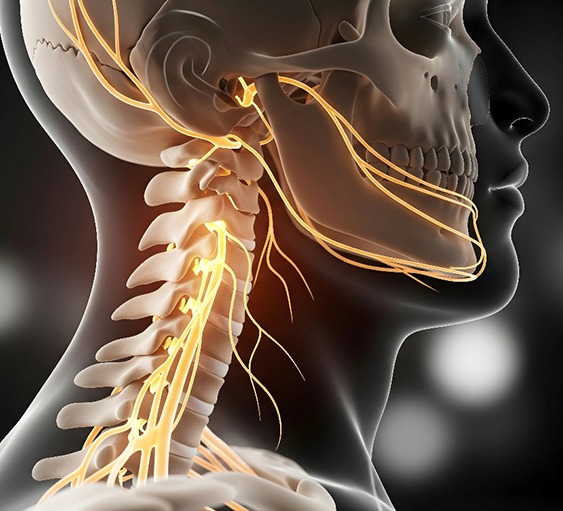
It cannot be stressed enough that the jaw joints (TMJs), occlusion (bite, or how the upper and lower teeth fit together), the chewing muscles, the airway, and the nervous system are all strongly connected. Unfortunately, this relationship is often overlooked.
Indeed, when the oral structures, including the jaw, are not in proper alignment, it can lead to a number of issues, including:
- Oral hygiene challenges due to overcrowded teeth or constricted dental arches, which in turn can increase the risk of tooth decay and gum infections (periodontal disease)
- Airway restriction and compromised breathing, especially during sleep
- Increase tension in the muscles of the head, neck, and shoulders
- A heightened stress response (sympathetic overactivity)
Over time, these factors can have a major influence on various aspects of overall health, including:
- Chronic pain patterns
- Ongoing sleep disturbances and persistent fatigue
- Variability in blood pressure
- Issues with metabolic regulation
Of course, we are not saying that jaw issues are the only possible cause of complex combinations of symptoms. However, it is often a contributor to ongoing struggles and should never be dismissed as unimportant.
Our Approach: Understanding the Whole System
In our office, Dr. Lim and our team take a comprehensive approach to care that focuses on identifying and treating the root cause of health issues.
During your consultation, we will evaluate how your jaw positioning, bite alignment, airway, and the related muscles and nerves work together. They are an integrated system and should be managed as such.
To help us provide precise and effective treatment, we use advanced diagnostic methods such as:
- 3D imaging with a CBCT machine
- Neuromuscular analysis (EMG/K7), which measures muscle positions and helps to identify structural defects within the TMJs
- Jaw tracking and functional assessments, which monitor movement of your jaw in real time in order to identify points of disharmony
With the help of these tools, we are often able to identify imbalances that may not be visible in a routine exam.
Restoring Function and Balance
We never want to take a “band-aid” approach to care that only addresses symptoms. Our goal is to improve function, stability, and balance in a way that provides long-term benefits for our patients.
By properly addressing your jaw position, bite, and airway, you may experience remarkable benefits, including:
- Relief from head, neck, and jaw discomfort or chronic pain
- Improved sleep quality and energy
- Reduced muscle tension and stress load
- Better oral health, including reduced risk of decay and gum disease and a healthier oral microbiome
- Improved posture and physical comfort
- Enhanced overall quality of life
Please keep in mind that results vary depending on the details of each case. We will tailor your treatment care plan with the goal of providing the most effective solution for your unique circumstances.
Are you ready to learn more about how neuromuscular dentistry may be able to help you? Contact us today to schedule your in-depth consultation.
Introducing The Missing Link
Years of clinical experience and careful observation have revealed a pattern. Many patients with complex, chronic symptoms often had one thing in common: Instability in their jaw, bite, and upper airway. This system shares a direct connection to the brainstem, nervous system, respiratory system, posture, and overall muscular balance. At its center lies the trigeminal nerve.
read moreAs a general dentist who focuses on TMJ disorder, musculoskeletal conditions, and migraine headaches, I began to see something that changed the way I understood health. Over the past several years, I have had the privilege of seeing many patients referred to me by physicians and healthcare providers.
These patients had complex conditions — ADHD, POTS, complex regional pain syndrome, sympathetic overdrive, migraines, head and neck pain, and sleep apnea. On the surface, these conditions seemed unrelated, but eventually, as the same underlying imbalance was addressed, their symptoms began to improve. They achieved better sleep, fewer headaches, less anxiety, better posture, and better overall quality of life.
Lisa was one of those patients. After we treated her, her symptoms improved significantly, even to the point where her husband declared, “I got my wife back.”
Millions of people are just like Lisa — desperately searching for answers.
Therefore, my goal in sharing information is not to replace medicine or dentistry. Rather, I want to connect them! If you have been struggling with symptoms that your care providers cannot seem to figure out, if your treatments provided temporary results at best, rest assured that you are not alone! The answer might simply be The Missing Link.