
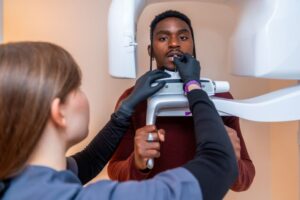
Digital X-rays are a staple in the world of dentistry. In fact, many dentists take at least one set of X-rays per year for each patient in order to monitor their oral health and track key changes. Yes, X-rays are important! However, despite their advantages, they are not the ideal imaging tool for every situation. In some cases, X-rays can even lead to missed diagnoses of TMJ disorder (TMD) and airway problems. This blog post explains why that happens and how more detailed imaging methods can help.
Limits of Regular X-Rays
Regular digital X-rays produce two-dimensional images of the areas they scan. While they can provide valuable information — especially if they are taken from different angles — they still do not provide enough insight for accurate diagnosis of certain conditions.
In addition, a regular X-ray focuses only on the bony elements of the temporomandibular joints (the jaw joints, also called the TMJs). Therefore, it cannot be used to identify problems with nerves, muscles, and other important soft tissues.
The Benefits of 3D Imaging with a CBCT Machine
Due to the limitations of regular digital X-rays, many neuromuscular dentists have invested in an advanced technology known as a Cone Beam Computed Tomography (CBCT) machine.
This device uses the same type of radiation as a regular X-ray. However, it is emitted in a cone-shaped beam and can therefore capture three-dimensional images that provide a remarkable level of detail. It can even show certain nerves and connective tissues. Additionally, it can help with airway mapping to help your neuromuscular dentist understand any breathing issues that might be related to your TMJs or other oral structures.
A CBCT machine can work alongside other advanced technologies, such as TekScan (an advanced type of bite analysis) and K7x (which helps evaluate muscle function). Together, these tools provide a wealth of information that a qualified dentist can use to identify the cause of your symptoms and recommend the most effective treatment.
Why Choose a Dentist with Advanced Imaging Capabilities?
A neuromuscular dentist who uses CBCT and other advanced technologies is in a better position to serve you than a dentist without the same tools. Here are some benefits you may experience as a result of an in-depth evaluation of your TMJs and airway:
- A better understanding of your symptoms, whether you are struggling with teeth grinding, headaches, or obstructive sleep apnea.
- Treatment that is designed to address the cause of your struggles, rather than just mask the symptoms.
- Superior long-term results compared to a “band-aid” approach to care.
What methods does your dentist use to evaluate TMJ problems and airway issues? Ask questions about their technology so you can make a well-informed decision about where to go for treatment.
Meet Dr. Lim
Dr. Heng Lim is one of only 500 Fellows of the Las Vegas Institute of Advanced Dental Studies, where he received advanced training in neuromuscular dentistry. As such, he is a leader in the field of TMJ treatment. In our office, we use a CBCT machine, TekScan, K7x, and other advanced technologies to provide the best possible care for our patients. To learn more about us or to request a consultation, contact Life Smiles of Owasso at 918-274-3779.